
- Introduction
- What is an LRAD?
- Law Enforcement Perspective: Benefits of LRAD Use
- Criticisms and Concerns from Protesters and Advocacy Groups
- The Legal Distinction Between Protest and Riot
- The Role and Legitimacy of ICE
- Allegations of Political Motivation and Funding in Anti-ICE Protests
- Key ICE Enforcement Cases: Successes, Controversies, and Implications
- Notable Successes: Targeting Criminal Aliens and National Security Threats
- Major Controversies: Human Rights Concerns and Operational Failures
- Broader Implications for Immigration and Civil Rights
Introduction
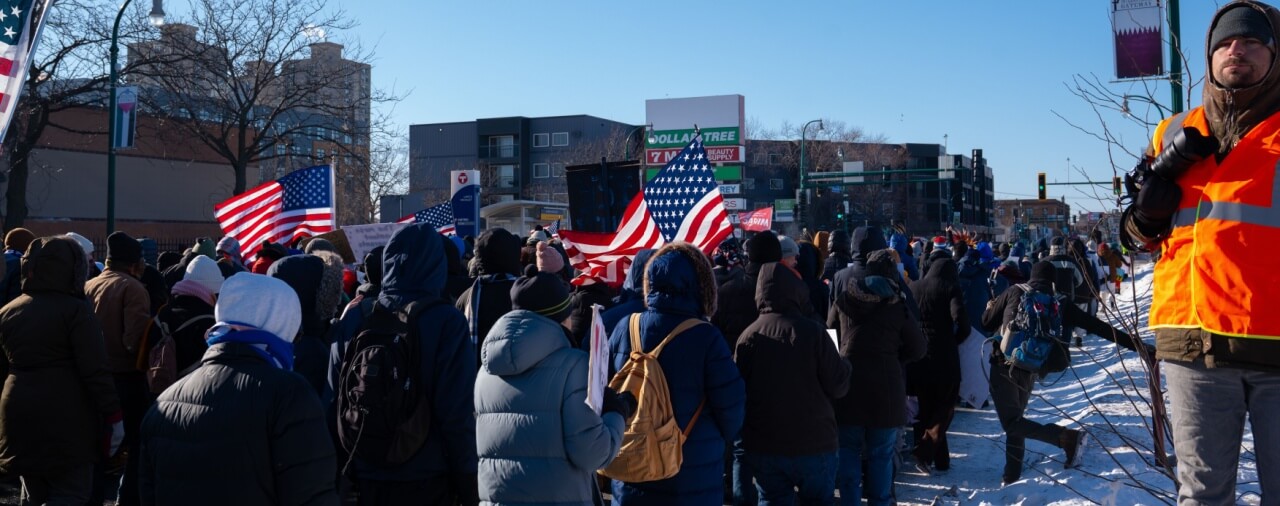
On January 26, 2026, a group of protesters gathered outside the SpringHill Suites by Marriott in Maple Grove, Minnesota, believing that U.S. Border Patrol Chief Patrol Agent Gregory Bovino was staying at the hotel.[1] The demonstration was part of broader opposition to U.S. Immigration and Customs Enforcement (ICE) policies, with participants expressing concerns over immigration enforcement practices.[2] According to local authorities, the protest escalated, leading to property damage and objects being thrown at officers, prompting a response from multiple law enforcement agencies, including the Minnesota State Patrol.[3]
Law enforcement declared the gathering an unlawful assembly and utilized a Long-Range Acoustic Device (LRAD) to issue dispersal orders.[4] The Minnesota State Patrol confirmed that the LRAD was employed solely in its voice mode to communicate warnings, ensuring the entire crowd could hear the announcements amid the noise.[5] Officials emphasized that the device was not activated in its “deterrent” setting, which emits a high-pitched tone capable of causing discomfort or pain.[6] The incident resulted in 26 arrests for charges including unlawful assembly and riotous conduct.[7] (For insights on handling such charges in immigration contexts, see our guide on deportation and removal defense.)
What is an LRAD?
The LRAD, originally developed for military use, is a high-powered speaker system capable of projecting clear audio over long distances, up to several thousand feet.[8] It can operate in two primary modes: one for broadcasting verbal messages and another for emitting alert tones to deter crowds.[9] In law enforcement contexts, it is often described as a non-lethal tool for crowd management.[10]
Law Enforcement Perspective: Benefits of LRAD Use
Supporters of LRAD deployment, including police departments and manufacturers, argue that the device enhances safety by allowing officers to communicate effectively from a distance, reducing the need for physical confrontations.[11] The Minnesota State Patrol has possessed an LRAD since 2013 and uses it to ensure large groups receive clear instructions during unlawful events.[12] Proponents highlight its role in de-escalation, noting that audible warnings can prevent escalation to more forceful measures, potentially saving lives and minimizing injuries.[13] In helicopter-mounted applications, for instance, it aids in broadcasting directives during civil unrest, promoting orderly dispersal.[14]
Experts like those from the Center for Strategic and International Studies have described it as a tool that “can avoid lethal outcomes while asserting control.”[15] Law enforcement organizations emphasize that proper training ensures safe use, positioning LRAD as a safer alternative to kinetic force.[16]
Criticisms and Concerns from Protesters and Advocacy Groups
On the other side, critics, including civil rights organizations and some protesters at the Maple Grove event, contend that LRADs can function as sonic weapons, even in voice mode, potentially causing harm such as ear ringing, dizziness, or permanent hearing loss.[17] Reports from the scene included complaints of physical discomfort, though authorities deny using the deterrent function.[18] Groups like Physicians for Human Rights have raised alarms about the indiscriminate nature of acoustic devices, which can affect bystanders and even officers, leading to serious injuries.[19]
Legal precedents support these concerns. In a 2021 ruling by the U.S. Court of Appeals for the Second Circuit regarding NYPD’s use of LRAD during protests, the court deemed intentional deployment capable of causing injury as a violation of constitutional protections against excessive force.[20] The ACLU has similarly criticized LRADs for their potential to emit “loud painful and potentially dangerous levels of noise,” advocating for stricter regulations.[21] Some social media users and activists have labeled the Maple Grove incident as “physically hurting protesters,” calling for lawsuits against the government.[22]
Critics also point to broader issues of police militarization, arguing that devices like LRADs, transferred from military surplus, erode community trust and disproportionately impact marginalized groups during protests.[23] (Explore related discussions on protesters’ rights in immigration contexts in our article on asylum from persecution.)
The Legal Distinction Between Protest and Riot
In the United States, the distinction between a legitimate protest and a riot is rooted in legal definitions and constitutional protections. The First Amendment protects the right to peaceful assembly and free speech, allowing individuals to express disapproval of laws, policies, or societal issues through organized public demonstrations.[24] However, this protection does not extend to actions that involve violence, property damage, or threats to public safety.[25] A protest is generally defined as a usually organized public demonstration of disapproval, while a riot is characterized as a disturbance of the peace involving three or more people acting with a common purpose in a violent and tumultuous manner that terrorizes the public.[26]
The federal Anti-Riot Act of 1968 provides a specific legal framework, defining a riot as a public disturbance involving acts of violence by one or more persons in a group of three or more, which creates a clear and present danger of, or results in, damage or injury to property or individuals.[27] Many states have similar laws prohibiting rioting or related crimes like destruction of property, arson, assault, or disorderly conduct.[28] When a gathering escalates to include these elements—such as the use of weapons, intentional injury to others, or widespread property destruction—it crosses into criminal territory and loses First Amendment protections.[29] At that point, law enforcement may intervene, as shutting down such an event is considered a last resort only when there is an immediate threat of riot, disorder, or harm to public safety.[30]
Courts and legal experts emphasize that while protests are intended to be disruptive to draw attention to issues, they must remain non-violent to qualify as protected speech.[31] Riots, by contrast, prioritize chaos over message, posing risks to public security and safety, and are not shielded by constitutional rights.[32] This line can sometimes blur in practice, leading to debates over when peaceful protesters are misidentified as rioters, but the core legal principle holds that violence invalidates the legitimacy of the action as a form of protest.[33]
The Role and Legitimacy of ICE
U.S. Immigration and Customs Enforcement (ICE) is a federal law enforcement agency established under the Department of Homeland Security (DHS) through the Homeland Security Act of 2002, which was enacted by Congress in response to the events of September 11, 2001.[34] Its creation merged functions from prior agencies, such as the U.S. Customs Service and the Immigration and Naturalization Service, to centralize immigration and customs enforcement.[35] ICE’s stated mission is to enforce federal immigration laws, conduct criminal investigations, preserve national security, and protect public safety by targeting threats like convicted criminal noncitizens, gang members, and those who violate immigration statutes.[36] (For a deeper dive into ICE’s role, visit our page on ICE enforcement priorities.)
The agency’s authority derives from over 400 federal statutes passed by Congress, focusing on interior enforcement (within U.S. borders), humane detention, preventing terrorism, and combating illegal movement of people and goods.[37] Key components include Enforcement and Removal Operations (ERO), which handles arrests, detentions, and removals of individuals who violate immigration laws, and Homeland Security Investigations (HSI), which addresses transnational crimes like human trafficking and drug smuggling.[38] ICE officers have statutory powers under provisions like 8 U.S.C. §§ 1226 and 1357 to arrest and detain individuals suspected of immigration violations, often using administrative warrants based on probable cause.[39] (Learn more about immigration detention procedures.)
Allegations of Political Motivation and Funding in Anti-ICE Protests
Critics of anti-ICE demonstrations, including some political figures and commentators, have alleged that these protests, including the one in Maple Grove, are politically motivated and funded by donors for partisan purposes, often pointing to involvement from professional leftist activists.[40] Reports suggest that groups organizing or supporting these actions, such as Indivisible Twin Cities, the Sunrise Movement, and the Party for Socialism and Liberation, receive funding from major left-leaning foundations and dark money networks.[41] For instance, George Soros’s Open Society Foundations has provided millions to groups like Sunrise since 2019, while the Ford Foundation and Tides Foundation have also contributed significant grants.[42] Some investigations, including by the FBI and congressional committees, have probed potential foreign influences, such as ties to Neville Roy Singham, a U.S. billionaire living in China, whose funding allegedly flows through opaque channels to activist organizations.[43] Additionally, groups like the Coalition for Humane Immigrant Rights (CHIRLA) and Central American Resource Center (CARECEN) receive substantial government grants alongside private donations from platforms like ActBlue.[44]
On the other hand, fact-checking sources and experts argue there is no concrete evidence that protesters are paid agitators or that the demonstrations are solely orchestrated for illegitimate purposes.[45] Journalism professor Danielle K. Brown noted a lack of evidence for philanthropic funding of widespread protest efforts, describing many actions as grassroots responses to perceived injustices.[46] Organizers, including labor unions, faith-based groups, and community organizations, emphasize that protests stem from genuine concerns over ICE tactics, such as fatal shootings and community disruptions, rather than external manipulation.[47] While some groups receive donations to support logistics like materials and training, they assert that these funds do not dictate strategy or imply paid participation.[48] (For related insights on protest-related persecution in asylum claims, see our overview of the 2020 Belarus Protests.)
Key ICE Enforcement Cases: Successes, Controversies, and Implications
U.S. Immigration and Customs Enforcement (ICE) plays a central role in enforcing federal immigration laws within the United States, focusing on the arrest, detention, and removal of noncitizens who violate these statutes.[49] Since its establishment in 2003, ICE has handled thousands of cases annually, ranging from the removal of individuals with serious criminal convictions to more routine enforcement actions.[50] Under various administrations, including the second Trump term beginning in 2025, ICE’s operations have intensified, leading to both praised successes in targeting public safety threats and significant controversies over due process, mistaken identities, and impacts on U.S. citizens.[51] This article examines key cases that highlight these dual aspects, drawing from official ICE reports, court documents, and independent analyses to provide a balanced view. (For expert guidance on challenging ICE actions, consult our deportation defense resources.)
Notable Successes: Targeting Criminal Aliens and National Security Threats
ICE often emphasizes its focus on “the worst of the worst” – individuals with violent criminal histories or those posing national security risks.[52] For instance, in December 2025, ICE concluded Operation Angel’s Honor, a 14-day initiative named after Laken Riley, resulting in the arrest of over 1,030 criminal noncitizens across the country.[53] This operation targeted individuals with convictions for serious crimes such as assault, drug trafficking, and gang-related activities, aligning with the agency’s mission to enhance public safety.[54] (See our analysis of criminal aliens and deportation.)
Worksite enforcement has also yielded successes, like the 2008 raid on Agriprocessors in Postville, Iowa, which led to the arrest of nearly 400 noncitizens and exposed labor violations, ultimately resulting in criminal charges against company executives for harboring undocumented workers.[59] More recently, in September 2025, ICE arrested about 475 individuals at a Hyundai battery plant construction site in Georgia, marking the largest single-site enforcement action in DHS history and targeting unauthorized employment.[60]
Major Controversies: Human Rights Concerns and Operational Failures
Despite these achievements, ICE’s enforcement has drawn sharp criticism for alleged overreach, inadequate care in detention, and impacts on vulnerable populations.[61] A Physicians for Human Rights (PHR) report analyzed 52 deaths in ICE custody from 2017 to 2021, concluding that 49 (95%) were preventable or possibly preventable due to substandard medical care, including incorrect diagnoses and delayed treatments.[62] Specific cases include Jesse Jerome Dean, Jr., who died from an undiagnosed gastrointestinal hemorrhage after losing 20 pounds without proper medical referral, and Emigdio Abel Reyes Clemente, who succumbed to untreated bacterial pneumonia misdiagnosed as influenza.[63] Critics, including the ACLU, argue that ICE’s investigations into these deaths are flawed, with evidence destruction and omitted facts, eroding accountability.[64] (For more on detention challenges, read our article on habeas corpus in immigration detention.)
Worksite raids have also sparked controversy. The 2019 Mississippi raids arrested 680 workers at poultry plants, leading to family separations and community trauma, with reports of children left without caregivers.[65] In Pennsylvania, a 2024 ACLU analysis of ICE arrest records revealed disproportionate targeting of Latin American men in low-wage jobs, routine civil rights violations during vehicle stops, and family separations in nearly one-third of arrests.[66] Additionally, ICE has faced backlash for detaining U.S. citizens, minors, green card holders, and DACA recipients in 2025, including mistaken arrests that highlight flaws in identification processes.[67] (Explore our resources on immigration detention defense.)
Community impacts extend beyond arrests. A 2011 study in Everett, Massachusetts, found that fear of ICE raids caused high stress levels among immigrants, reducing access to health services and emotional well-being.[68]
Broader Implications for Immigration and Civil Rights
This incident occurs amid heightened tensions over U.S. immigration policies, with anti-ICE protests reflecting debates on enforcement tactics.[69] While law enforcement views LRAD as a tool for maintaining order, opponents see it as emblematic of overreach that could chill free speech.[70] Fact-checking outlets like Snopes have clarified that, in this case, the device was used for communication rather than as a weapon, but the debate underscores calls for clearer guidelines on its deployment.[71]
As discussions continue, experts recommend enhanced training, transparency, and oversight to balance public safety with constitutional rights.[72] No formal investigations into the Maple Grove use have been announced as of February 1, 2026.[73] (For comprehensive immigration law guidance, visit our immigration law firm overview.)
- Snopes – Fact-check on Minnesota police use of LRAD during the protest
- The Conversation – Explanation of LRAD as a sonic device for crowd control
- Britannica – Distinction between protest and riot under U.S. law
- Cornell Law – Federal Anti-Riot Act and related legal frameworks
- USAFacts – Overview of ICE’s role and enforcement authority
- DHS (Department of Homeland Security) – Details on ICE operations and successes like Operation Angel’s Honor
- Brookings Institution – Analysis of ICE controversies and accountability issues
- ACLU – Criticisms of LRAD use and protesters’ rights