
- Introduction
- The Closure in Context
- From Announcement to Execution: The Eight-Month Acceleration
- The Concord Conversion and the Silent Venue-Change Problem
- The Article II Constitutional Architecture
- JAG Immigration Judges and the Loss of Subject-Matter Expertise
- Practitioner Implications: What To Do Now
- Conclusion
Introduction
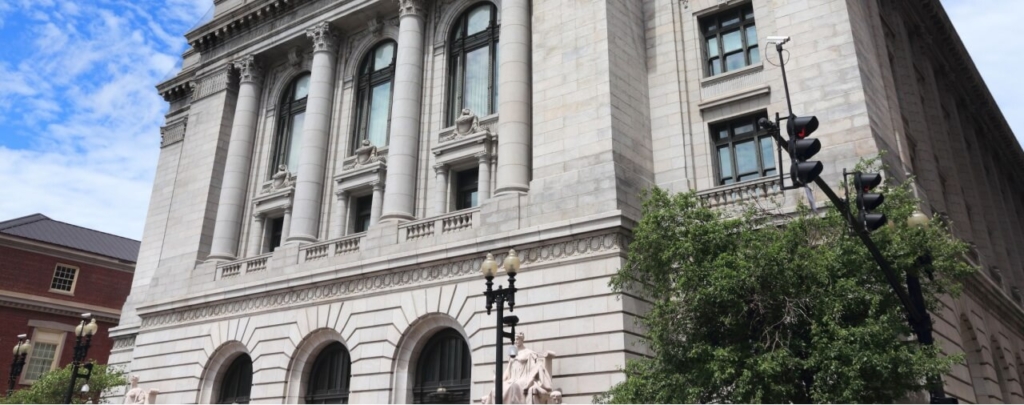
On May 22, 2026, the Associated Press reported what immigration practitioners on the West Coast had already absorbed three weeks earlier: the San Francisco Immigration Court at 100 Montgomery Street had closed its doors for good on May 1, 2026, leaving the city without a primary immigration tribunal for the first time in modern memory.1 The court that began the second Trump administration with twenty-one judges had only two remaining on closing day. The rest had been fired, forced into retirement, or had resigned under conditions practitioners increasingly describe as institutional pressure to abandon the bench. This article picks up where our February 2026 analysis of the closure announcement left off,2 examines what the actual execution reveals about the operating model the Executive Office for Immigration Review (“EOIR”) is now pursuing, and identifies the procedural traps practitioners must navigate as cases are administratively reassigned to the Concord Immigration Court.
The Closure in Context
Our prior coverage has tracked the unfolding transformation of the federal immigration judiciary in three discrete phases. In January 2026, we documented the December 1, 2025 simultaneous removal of seven New York-based immigration judges, situating those firings against the broader pattern of removals that had accelerated throughout the latter half of 2025.3 In February 2026, we reported on EOIR’s announcement that the San Francisco Immigration Court at 100 Montgomery Street would be permanently closed by January 2027, with personnel to be transferred to the Concord Immigration Court located approximately thirty miles east.2 In April 2026, drawing on a New York Times investigative report published April 9, 2026, we updated the public record on the scope of the purge, with EOIR’s own data confirming that the agency had transitioned from a structure premised on tenured adjudicative independence to one premised on adjudicative responsiveness to enforcement priorities.4 The May 2026 closure should be read against that prior coverage. It is not an isolated administrative action but the operational culmination of a systemic reorientation.
Two features of the actual closure distinguish it from what we anticipated in February. First, the closure was executed eight months ahead of the January 2027 timeline the agency had initially announced. Second, the closure was paired with an administrative restructuring of the surviving Sansome Street facility that materially alters venue practice in ways that practitioners must immediately address. Sections II and III, infra, examine each in turn. Sections IV and V then place the closure within the two constitutional and structural transformations now reshaping the immigration judiciary nationally. Section VI sets out the practical guidance our firm has developed for managing affected cases.
From Announcement to Execution: The Eight-Month Acceleration
EOIR issued two notices that bracketed the closure. The first, dated April 10, 2026, announced that hearings would cease at the Montgomery Street location after May 1, with filings to be made at the Sansome Street location beginning May 4.5 The second, dated May 1, 2026 and effective the same day, declared that the Montgomery Street court would “permanently close” at the close of business on September 4, 2026, and that the Sansome Street location would be administratively absorbed into the Concord Immigration Court as a “hearing location.”6 The stated rationale was cost-effectiveness, with EOIR invoking its coordination with the General Services Administration. No alternative public explanation has been offered, and the agency has not addressed the gap between the original January 2027 timeline and the executed May 2026 timeline.
The staffing picture provides important context. As Representative Mark DeSaulnier (CA-10), whose district includes Concord, observed in a March 31, 2026 letter to EOIR Director Daren K. Margolin, the San Francisco court that began 2025 with twenty-one judges had been reduced to four by the time of his writing, with fourteen having been fired and four having entered early retirement under what DeSaulnier characterized as coercive conditions.7 By May 1, that number had been further reduced to two. The Concord Immigration Court, which had been opened in February 2024 with announced capacity for twenty-one judges precisely to relieve pressure on the San Francisco docket, has never reached that capacity. As of the spring of 2026, the combined San Francisco/Concord backlog stood at 177,827 cases.7
Local advocates have reported that hearings on the cases transferred from San Francisco will not begin in earnest until December 2026 at the earliest.8 Professor Bill Hing of the University of San Francisco has estimated that approximately 15,000 cases on the San Francisco docket were placed into immediate procedural limbo by the May 1 closure.8 Practitioners have reported receiving conflicting notices, including cases initially marked closed and then re-noticed without acknowledgment of the prior closure, and have described one anecdote that has now circulated widely: a client whose case was provisionally granted asylum by an immigration judge who was then fired before signing the written decision, resulting in transfer of the case to a second judge who was also subsequently fired.1
The Concord Conversion and the Silent Venue-Change Problem
The single most consequential procedural development for practitioners is one that has received almost no attention in the general-interest coverage. Per reporting in Mission Local on the operational details of the conversion, EOIR is taking the position that subsequent hearings in cases originally filed at the San Francisco Immigration Court may be transferred to the Concord Immigration Court without a motion to change venue, with the transfer effectuated by updating the online hearing schedule.9 This represents a material departure from established practice under 8 C.F.R. § 1003.20.10 The historical baseline rule requires a motion (or sua sponte order with notice) and a reasoned good-cause determination weighing the administrative needs of the court against the burdens on the respondent and counsel.
A. The In Absentia Risk Created by Silent Venue Changes
The consequences of this departure are not merely theoretical. Under INA § 240(b)(5),11 a respondent who fails to appear at a properly noticed hearing is ordered removed in absentia. The statutory rescission remedies are narrow. Rescission for exceptional circumstances under INA § 240(b)(5)(C)(i) must be sought within 180 days, and rescission for lack of notice under INA § 240(b)(5)(C)(ii) requires demonstrating that notice was not received.12 When venue changes occur through an unannounced update to the online hearing schedule rather than through a noticed motion, the practical operation of these statutory remedies becomes substantially more difficult to invoke.
Pro se respondents and counseled respondents whose attorneys do not check the EOIR Automated Case Information System (“ACIS”) daily or who do not have a current EOIR-28 entry of appearance on file are particularly exposed. A respondent who appears at the Sansome Street facility on the noticed date only to discover that the hearing has been silently transferred to Concord, who then cannot make the additional ninety-minute BART or forty-five-minute vehicle journey within the morning, has a real risk of receiving an in absentia order before close of business. Rescission practice will then turn on whether the respondent can demonstrate either exceptional circumstances or, more difficult given EOIR’s position that the docket-system update itself constitutes constructive notice, lack of notice altogether.
B. Defensive Measures Counsel Should Take Now
Counsel representing any client with a San Francisco-originated case should take three steps immediately. First, ensure that an EOIR-28 Notice of Appearance is currently on file with both the Sansome Street location and the Concord court of administrative control. The absence of a current appearance form is the leading mechanical cause of missed notice in our experience. Second, file an EOIR-33/IC change-of-address form whenever the client’s address has changed since the case was originally docketed, and confirm receipt with both locations.13 Third, calendar daily ACIS checks for any case scheduled for hearing within the next sixty days, and document each check with screen captures so that any subsequent motion to reopen has a contemporaneous record of diligence. Where a silent venue change is detected, counsel should consider filing a prophylactic motion to change venue back to a location reasonable for the client, citing 8 C.F.R. § 1003.20 and the absence of any noticed motion or order making the change of venue in the first instance.
Where the silent venue change has resulted in an in absentia order, counsel should be prepared to file a motion to reopen under 8 C.F.R. § 1003.23(b)(4)(ii) on the basis that the docket-system update did not provide the statutorily required notice.14 Such motions are not subject to the time and numerical limits applicable to other motions to reopen. As discussed infra Section VI, we have begun maintaining a parallel evidentiary record for every San Francisco-originated case to anticipate this contingency.
The Article II Constitutional Architecture
The closure of the San Francisco Immigration Court cannot be fully understood without reference to the constitutional theory now underwriting the mass removals of immigration judges that made the closure possible. On March 20, 2026, the Merit Systems Protection Board (“MSPB”) decided Jackler and Jaroch Consolidation v. Department of Justice, 2026 MSPB 3.15 The two-member Republican panel held that immigration judges qualify as “inferior officers” under Article II of the Constitution and that the Attorney General’s constitutional removal authority abrogates the otherwise applicable statutory tenure protections found in Title 5, United States Code, Section 7513. The Board therefore dismissed the appeals for lack of jurisdiction, vacating an August 2025 administrative-judge order that had reinstated the two judges.
The MSPB’s reasoning drew heavily on dicta in Seila Law LLC v. Consumer Financial Protection Bureau, 591 U.S. 197 (2020),16 which struck down for-cause removal protections for the single director of the Consumer Financial Protection Bureau. As Peyton Baker, Nick Bednar, and Amy Wildermuth observed in Lawfare on April 2, 2026, the Board’s opinion accepts (correctly, in their view) that immigration judges are inferior officers under the Appointments Clause but mishandles the second analytical step by treating the inferior-officer classification as itself dispositive of removal-restriction validity.17 The Supreme Court has long upheld removal restrictions on inferior officers exercising adjudicative functions, and the Board’s opinion does not engage with the supervisory framework that has historically justified tenure protections for such officers.
The fired judges, represented by Nathaniel Zelinsky and the Washington Litigation Group, filed a petition for review with the United States Court of Appeals for the Federal Circuit on or about March 23, 2026. The petition argues that the MSPB misread Seila Law dicta and disregarded over a century of binding Supreme Court precedent on inferior-officer tenure protections.17 Whatever the outcome on appeal, the immediate consequence is that EOIR has proceeded throughout 2026 on the operating premise that immigration judges may be removed at will, and the closure of the San Francisco Immigration Court is one expression of that premise: the staffing pre-conditions for closure (the reduction from twenty-one to two judges) could not have been achieved under the pre-Jackler tenure regime.
JAG Immigration Judges and the Loss of Subject-Matter Expertise
The other transformation made visible by the San Francisco closure is the parallel reconstitution of the immigration-judge corps with attorneys lacking immigration-law expertise. On August 27, 2025, Secretary of Defense Pete Hegseth authorized the assignment of up to 600 Judge Advocate General (“JAG”) Corps attorneys to serve six-month renewable terms as Temporary Immigration Judges within EOIR.18 On August 28, 2025, EOIR published a final rule eliminating the prior regulatory requirement that Temporary Immigration Judges have at least ten years of immigration-law experience or prior service as immigration or appellate immigration judges.19 An October 23, 2025 Office of Legal Counsel advisory opinion (released publicly on November 15, 2025) blessed the assignment of JAG attorneys to civil-immigration adjudication.20
The objections to this arrangement are not merely aesthetic. The New York City Bar Association’s January 2026 condemnation identified three structural concerns.21 First, the arrangement creates substantial friction with the constitutional principle separating military authority from civilian governance. JAG attorneys remain officers within the military chain of command and are subject to the Uniform Code of Military Justice while serving as Temporary Immigration Judges. Second, the elimination of the experience requirement means that JAG attorneys may be assigned to adjudicate asylum claims governed by a body of law that the Supreme Court itself has characterized as exceptionally specialized and exceptionally complex.22 In Padilla v. Kentucky, 559 U.S. 356 (2010), Justice Stevens observed that immigration law has the capacity to bewilder even experienced practitioners.23
The relevance to the San Francisco closure deserves particular emphasis. The San Francisco Immigration Court was the originating court for INS v. Cardoza-Fonseca, 480 U.S. 421 (1987), the Supreme Court decision that established the “well-founded fear” standard for asylum eligibility under the Refugee Act of 1980.22 Dana Marks, the attorney who represented Luz Marina Cardoza-Fonseca and later served as an immigration judge in the same building, has been quoted in recent reporting as one of the most prominent critics of the closure.9 The constitutional-statutory framework that Cardoza-Fonseca set in place is now being administered, increasingly, by adjudicators whose familiarity with the framework dates from a six-week training course. The structural irony is sharp, and it bears on every well-founded-fear case that practitioners will be litigating into 2026 and beyond.
Practitioner Implications: What To Do Now
A. Case-Level Triage
Every practitioner with an active matter touching the San Francisco docket should triage three categories of cases. First, cases set for individual hearing within sixty days require immediate confirmation of venue, hearing time, and judge assignment. Second, cases set for master calendar require confirmation that the master-calendar location has not been silently transferred, since master-calendar transfers are the most common silent-venue-change pattern we have seen in the first three weeks following the closure. Third, cases provisionally granted relief but not yet reduced to written decision require special handling: as the anecdote reported by the Associated Press illustrates, the underlying adjudicator may have been removed before signing the written order, and the case may be reassigned without notice. See supra Section II.
B. Substantive Strategy Under the New Regime
Substantively, the lowered probability that any given adjudicator will be familiar with controlling asylum precedent argues for two adjustments in submission practice. First, articulation of particular social group and nexus elements should be substantially more detailed than has been customary, with explicit reference to the controlling Board precedents.24 The presumption that the adjudicator brings independent doctrinal knowledge to the cognizability analysis is no longer safe. Second, the documentary record should be constructed with the appellate audience in mind from the outset. Given the high probability that an asylum denial will be appealed to the Board of Immigration Appeals and (in the Ninth Circuit jurisdiction governing the San Francisco-Concord cases) ultimately to the Ninth Circuit on a petition for review, the record should be built to support de novo legal review even where it is being presented to a Temporary Immigration Judge whose familiarity with the doctrine is limited.
C. The Numbers Behind the Strategy
The strategic adjustments outlined above are responses to a measurable degradation in first-instance grant rates. The Transactional Records Access Clearinghouse (“TRAC”) reported in November 2025 that the national asylum grant rate had been cut in half over the preceding twelve months, from 38.2% in August 2024 to 19.2% in August 2025.25 The administration’s own April 10, 2026 Fact Sheet asserted a 7% asylum approval rate.26 EOIR’s May 21, 2026 press release announcing the investiture of seventy-seven immigration judges and five Temporary Immigration Judges signals that the structural reconstitution will continue.27 National Public Radio reported in February 2026 that approximately 202 judges who were in EOIR’s active corps in early 2025 are no longer there, that approximately 75% of attorney advisers have departed, and that approximately 54% of court supervisors are gone.28 The Acacia Center for Justice put the December 31, 2025 active-judge count at 557, a net loss of 178 permanent judges from the end of fiscal year 2024.29
Conclusion
The closure of the San Francisco Immigration Court is, on its surface, a real-estate decision wrapped in the vocabulary of cost-effectiveness. On any honest reading of the record, however, it is something quite different: the operational culmination of an institutional transformation whose constitutional architecture, staffing model, and procedural baseline have all been simultaneously remade over a fifteen-month period. The closure is the first such termination of a major-city primary immigration court. As discussed supra in Sections II and III, the administrative restructuring at the Sansome Street facility, when combined with the silent venue-change practice, creates real in absentia exposure for our clients. As discussed supra in Sections IV and V, the conditions that made the closure possible (the removal of nineteen of twenty-one San Francisco judges in roughly fifteen months, and their partial replacement with adjudicators lacking immigration-law experience) cannot be sustained without the constitutional reinterpretation of Article II removal authority now pending before the United States Court of Appeals for the Federal Circuit. The recommendations in Section VI reflect what our firm has implemented in response. We will continue to monitor and report as the Federal Circuit appeal is briefed and as the operational practice at Concord matures.
- Olga R. Rodriguez, San Francisco immigration court shuts down after purge of judges, leaving asylum cases in chaos, Associated Press (May 22, 2026). The Japan Today reprint cited by readers is available at japantoday.com (category: world).
- Alexander J. Segal, The Closure of San Francisco’s Main Immigration Court: Navigating Backlogs and Uncertainty in U.S. Immigration Adjudication, myattorneyusa.com (Feb. 10, 2026).
- Alexander J. Segal, Eight New York Immigration Judges Fired in Sudden EOIR Purge: A Dangerous New Phase in U.S. Immigration Adjudication, myattorneyusa.com (Jan. 6, 2026).
- Alexander J. Segal, The EOIR Purge: New Data Confirms Systematic Transformation of the Immigration Courts (April 2026 Update), myattorneyusa.com (April 2026).
- Executive Office for Immigration Review, EOIR to Stop Holding Hearings at the San Francisco Immigration Court’s Montgomery Street Location (Apr. 10, 2026), reported at AILA Doc. No. 26041365.
- Executive Office for Immigration Review, EOIR to Close the San Francisco Immigration Court (May 1, 2026), available at justice.gov/eoir.
- Letter from Rep. Mark DeSaulnier to Daren K. Margolin, EOIR Director (Mar. 31, 2026).
- Will Reisman, SF Immigration Court Closes Eight Months Early, Adding to Delays, Confusion, SFist (May 4, 2026).
- Eleni Balakrishnan, S.F.’s last immigration court will be reduced to a satellite by end of summer, Mission Local (May 2026).
- 8 C.F.R. § 1003.20 (governing change of venue in removal proceedings).
- INA § 240(b)(5), 8 U.S.C. § 1229a(b)(5) (in absentia removal where alien fails to attend properly noticed hearing).
- INA § 240(b)(5)(C)(i)–(ii), 8 U.S.C. § 1229a(b)(5)(C) (rescission for exceptional circumstances or lack of notice).
- EOIR Form-33/IC (Change of Address). Counseled respondents should also ensure a current EOIR-28 Notice of Appearance is on file at the receiving court.
- 8 C.F.R. § 1003.23(b)(4)(ii) (motion to reopen in absentia order for lack of notice; no time or numerical limit).
- Jackler and Jaroch Consolidation v. Department of Justice, 2026 MSPB 3 (Mar. 20, 2026).
- Seila Law LLC v. Consumer Financial Protection Bureau, 591 U.S. 197 (2020).
- Peyton Baker, Nick Bednar & Amy Wildermuth, MSPB Strikes Down Tenure Protections for Immigration Judges, Lawfare (Apr. 2, 2026).
- Memorandum from Pete Hegseth, Secretary of Defense, on Designation of Judge Advocate General Corps Attorneys as Temporary Immigration Judges (Aug. 27, 2025).
- Designation of Temporary Immigration Judges, 90 Fed. Reg. (Aug. 28, 2025) (final rule).
- Office of Legal Counsel, U.S. Department of Justice, Advisory Opinion on Temporary Immigration Judges (Oct. 23, 2025) (released Nov. 15, 2025).
- New York City Bar Association, Condemning the Use of Military Lawyers as Temporary Immigration Judges (Jan. 2026).
- INS v. Cardoza-Fonseca, 480 U.S. 421 (1987) (well-founded fear standard for asylum).
- Padilla v. Kentucky, 559 U.S. 356, 369 (2010) (describing immigration law as “susceptible of holding even practiced attorneys in its grasp”).
- Matter of C-A-R-R-, 29 I&N Dec. 13 (BIA 2025); Matter of H-A-A-V-, 29 I&N Dec. 233 (BIA 2025) (articulating particular social group and nexus standards).
- Transactional Records Access Clearinghouse (TRAC), Immigration Court Asylum Grant Rates Cut in Half (Nov. 18, 2025).
- White House Fact Sheet (Apr. 10, 2026) (asserting a 7% asylum grant rate).
- EOIR, Notices and Press Releases (May 21, 2026) (announcing 77 IJs and 5 TIJs).
- NPR Investigations, The Numbers Behind Trump’s Dismissals of Immigration Judges (Feb. 23, 2026).
- Acacia Center for Justice, The Corps of Experienced Immigration Judges are Being Hollowed Out: A Crisis Explained (May 2026).